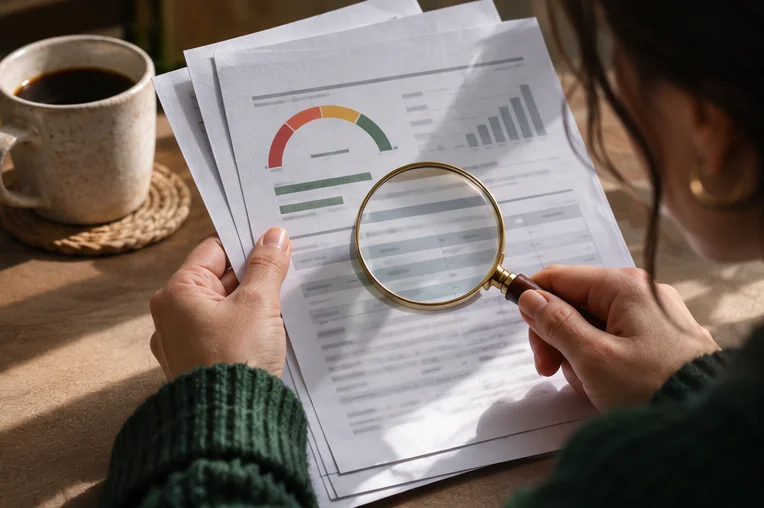
If a credit report shows an account you do not recognize or marks an on-time payment late, start with the credit report entry and the documents behind it. A strong dispute identifies one specific error, explains what the record should say, and gives the companies involved something they can check.
Pull all three reports and save the dates
The CFPB says you can request a free report from each of the three nationwide credit reporting companies every week at AnnualCreditReport.com. Pull Equifax, Experian, and TransUnion reports, since an entry can differ across reports. Save your copies in a private place and record the date and confirmation number for each.
Read your identifying information before you scan accounts. Look for addresses or accounts that belong to someone else, an incorrect account owner or status, a late payment you can document as on time, and a balance or limit that appears wrong. If an unfamiliar account points to identity theft, IdentityTheft.gov can help you build a recovery plan.
Match the entry to a record with the same date
For a reported late payment, look for the statement showing the due date and a lender confirmation or transaction record showing when the payment posted. For a balance issue, check the reporting date first. A balance that was accurate on an older date can differ from your latest statement. Request details from the lender if you cannot tell which date the report represents.
Create a short log with the bureau, the lender, the last few digits of the account, the exact item to correct, and the document that supports your position. If more than one bureau shows the error, identify the relevant page in each report.
Keep your dispute log and report copies in a private folder. When a bureau asks for identification, submit it through that bureau's verified channel and keep a dated copy of the information you provided.
An example of a specific dispute
In a hypothetical dispute, you might write that an account ending in 4821 shows the May payment as late, your May statement lists a May 15 due date, and the enclosed lender confirmation shows payment posted May 12. Ask the company to correct the payment status for May and point out the entry on the report. Use copies of your supporting documents and keep the originals.
Send the dispute and track the result
Dispute the item with each credit reporting company that shows it. Also contact the business that reported the information, such as the lender or card issuer. The CFPB provides mailing and online directions and sample letters. Save your submitted dispute, attachments, and confirmation. If you mail it, certified mail with a return receipt gives you a delivery record.
The CFPB says a credit reporting company generally has 30 days after receipt to investigate, with up to 45 days in some circumstances. Read the result and check the specific entry on the updated report. If the error remains, review the stated reason and any evidence you can add. The CFPB also offers a complaint process for unresolved credit reporting problems.
Try the numbers
Credit Card Payoff Calculator
Estimate how many months it will take to pay off a card at a fixed monthly payment.
Sources
Hazel Saves provides general financial education. Read the financial disclaimer or report an issue.